Archive for the ‘The Itinerant Golfer’ Category
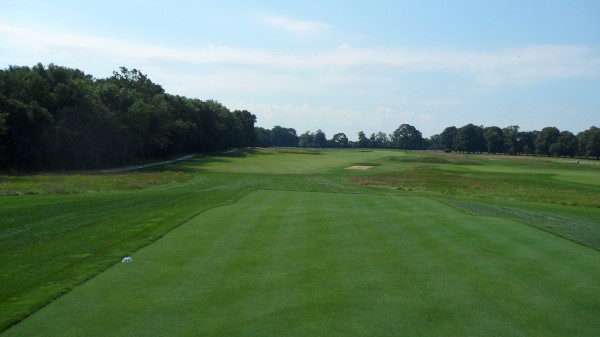
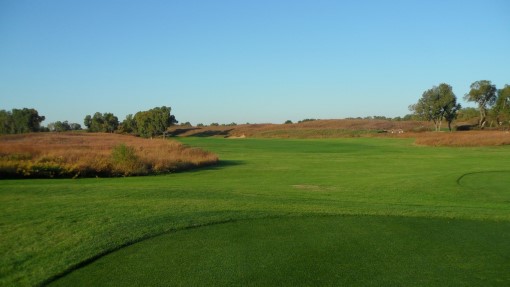
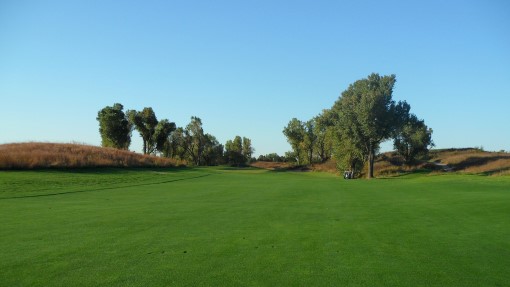
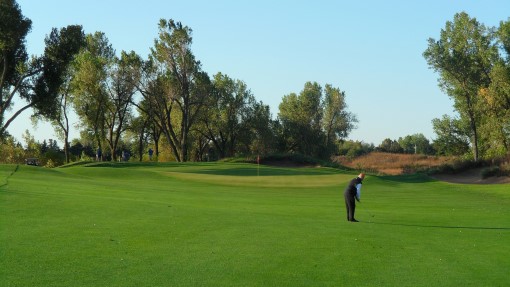
Sand Hills Golf Club
Location: Mullen, NE
Architect: Bill Coore & Ben Crenshaw
Year Constructed: 1994
Played: July 22-25, 2010
Sand Hills Golf Club is located in Mullen, Nebraska which according to the 2000 census has a population of 491. Unfortunately, I don’t know a single one of those 491 folks. Even if I did, I’m not sure it would help as nearly all of Sand Hills’ members do not live in Mullen. The club’s membership is mostly national members and therefore spread all over the country (probably the world). When you couple the spread out geography with the fact that the club has less than 200 members, meeting a member becomes quite the proverbial needle in the haystack .
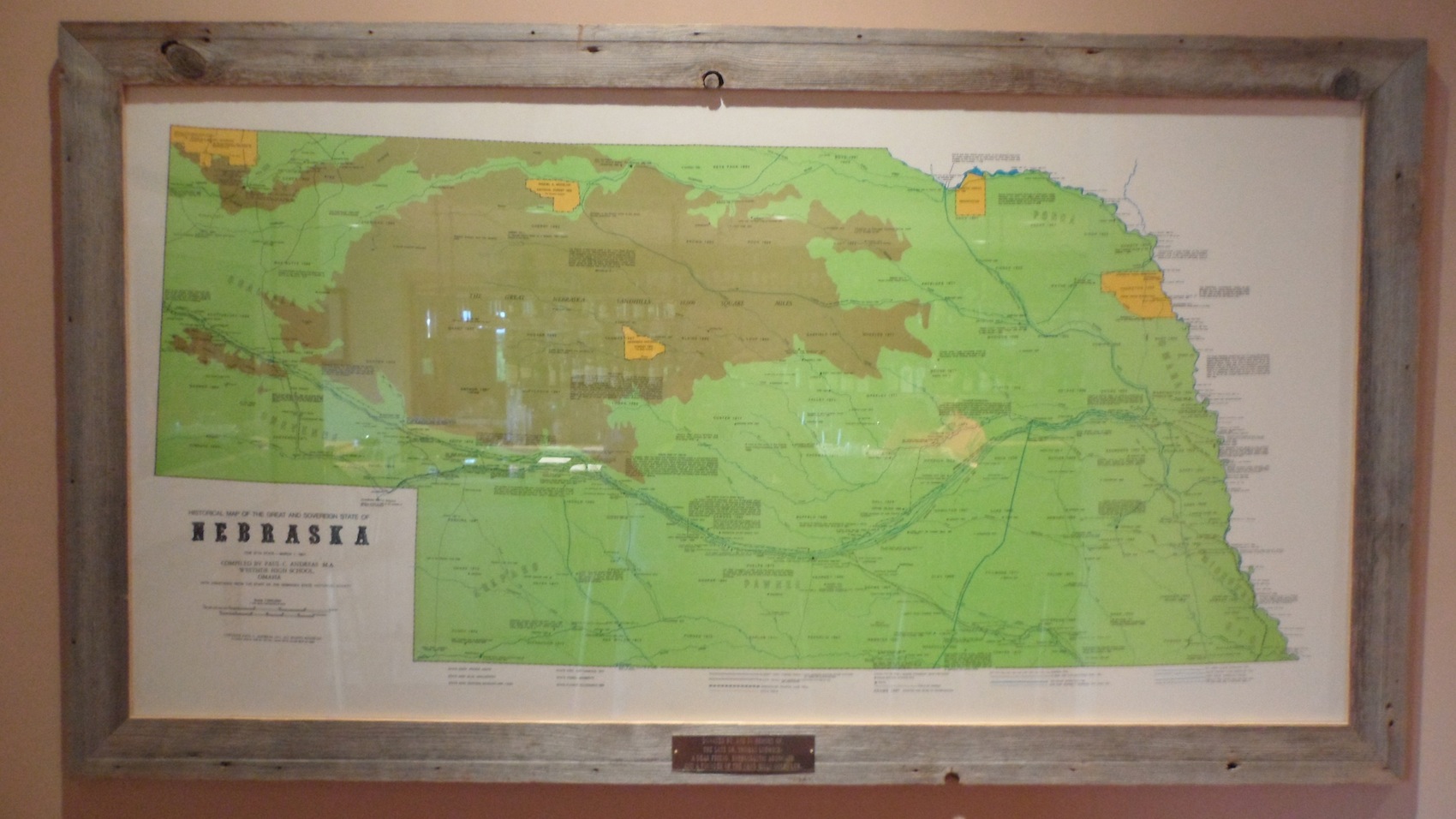
Sand Hills Golf Club is the brainchild of one man, Dick Youngscap. Mr. Youngscap is a Lincoln based developer who was presented with an 8,000 acre parcel of land in 1990 that he thought might be ideal for a golf course. To put the enormity of this property into perspective, my home course is built on a piece of land that is roughly 150 acres. Theoretically, a person with 8,000 acres would have enough land to build more than 100 golf courses. The sand hills are an enormous region of Nebraska and undeveloped land is abundant. The photo below is a map that hangs in the clubhouse which has the sand hills region highlighted in brown. This shows exactly how large of an area we are talking about (it must be equal to ~1/5 of the state).
Shoreacres
Location: Lake Bluff, IL
Architect: Seth Raynor
Year Constructed: 1921
Played: October 4, 2010
Shoreacres is one of the courses that I was really looking forward to on the list. I didn’t know anything about it other than everyone who plays there seems to come away in love with the classic Seth Raynor design.
Located just north of Chicago in the town of Lake Bluff, Shoreacres has occupied its perch on the shore of Lake Michigan since 1916. While the clubhouse does have a water view I should point out that the golf course itself is completely inland with no views of the lake or coastal holes anywhere on the course. In scouring the internet for information on the club there is very, very little available. I usually like to learn a little bit of history about a club before visiting but the best I could find in this case was a very abbreviated take on the club’s 94 year history. The short story is that the club was founded in 1916 and the course designed by Raynor opened in 1921. After 70 years the course had lost many of its “Rayor-esque” qualities and Tom Doak’s firm Renaissance Golf was brought in to restore the design to its original glory. From what I hear they did a masterful job. In an interesting side note I did discover that the original clubhouse, built by David Adler, burned to the ground in 1983. A local Chicago architect by the name of Laurence Booth was commissioned to build the new clubhouse which is in use today and compliments the style and vibe of the club perfectly.
We decided to play from the “Raynor” tees which play to 6,309 yards and, as I understand it, are the course’s original tees. Sometime in the recent past there were back tees added to 8 holes which allow for the tips to stretch out to 6,530 yards . . . this does modernize the course a bit, but even the new tees are fairly short and very manageable for the average golfer when compared to many of today’s modern courses.
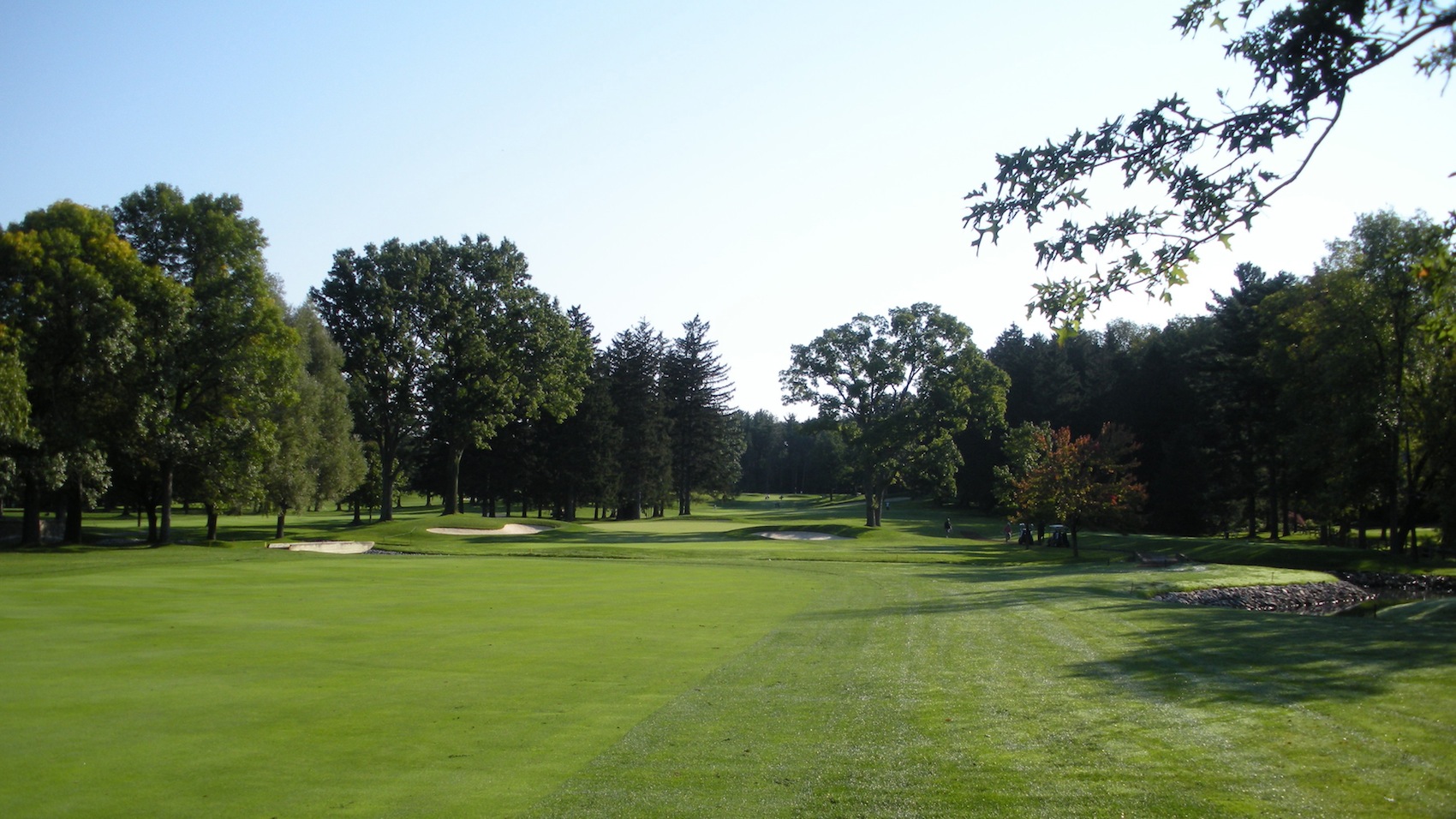
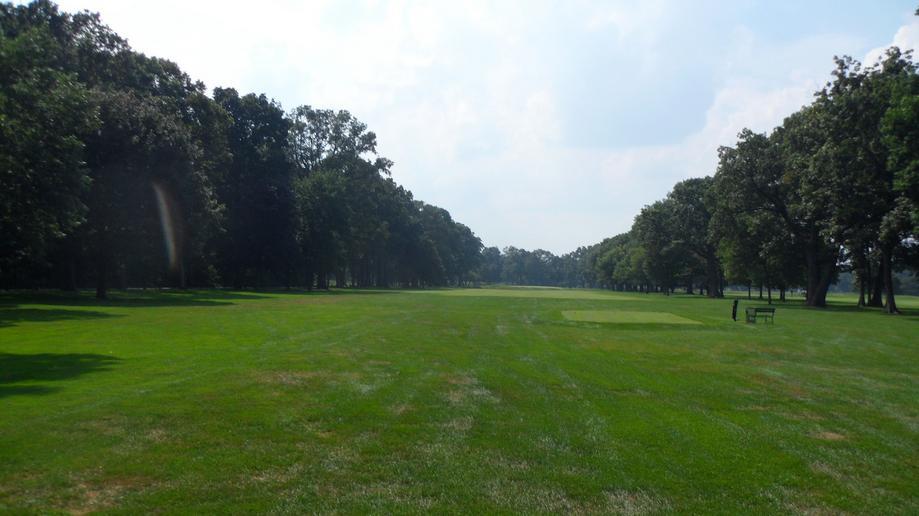
Raynor starts the course out fairly friendly on the 1st hole with a 478 yard par 5. The photo below was taken from the tee box and as illustrated is a fairly straight and flat hole.
Continuing with our series from the The Itinerant Golfer’s quest to play all top 100 American golf courses, The Scratch Pad is glad to bring you a profile of the 4th rated golf course in America, Oakmont Country Club.
Location: Oakmont, PA. Architect: Henry C. Fownes. Year Constructed: 1903. Played: 5/24/11
Oakmont Country Club is one of the most famous courses in all of golf. There have been 19 National Championships contested over the golf course at Oakmont Country Club including five US Amateurs, three PGA Championships, two US Women’s Opens and EIGHT US Opens with a ninth coming in 2017. There is no question that Oakmont Country Club is a favorite among the golf magazines that rate courses as it is always ranked in the Top 10 and quite often in the Top 5. Oakmont is a golf course that is known worldwide for its legendary green speeds and for being one of the most pure tests of championship golf on the planet.
Founded in 1903 Henry C. Fownes designed the course on the principle that “no poor shot should go unpunished”. According to legend, Mr. Fownes and his son used to sit on the golf course and watch play from the club’s members in order to “improve” the course. When they saw a poorly played shot a bunker would be placed in the spot where the player’s ball landed. Wow, that’s just downright mean!
Over its 100+ year history Oakmont has undergone many changes. The course was thought to have gotten too difficult and a significant number of the bunkers were removed over the years so the course wouldn’t be quite so penal. Most recently there was a major thinning of trees on the course. Historic photos show that when the course was built that there were not a tremendous number of trees on the property. As is apt to happen over time the trees had began to multiply, expand and ultimately impede play. As is usually the way at most clubs the idea of thinning out the trees proved to be a significant controversy among the members. During the 2007 US Open it was widely reported that the mission to remove trees had been a covert one with crews working all night under the cover of darkness so as not to arouse conflict with the members. In the morning there would be no trace of their work other than the missing trees. I wonder how long they got away with that before members started noticing their favorite trees missing!
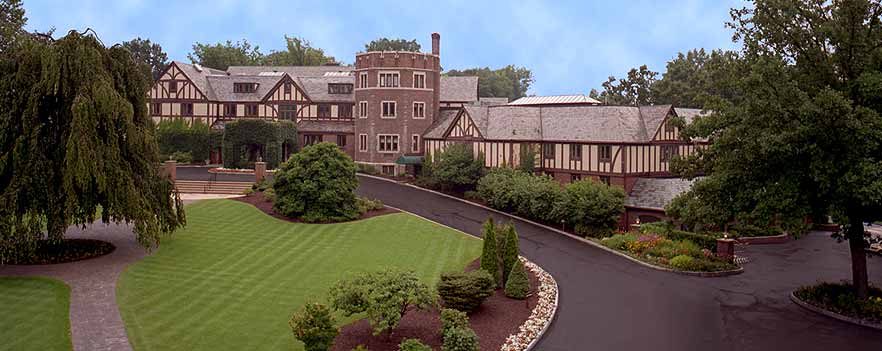
I played the course in 2011. The clubhouse at Oakmont is a classic tudor style building and has a great aura to it. In the locker room the benches are covered in spike marks from days gone by. You just can’t help but think about all the greats who have laced up their shoes in that locker room on their way to victory . . . Bobby Jones, Gene Sarazen Sam Snead, Tommy Armour, Ben Hogan, Jack Nicklaus and many, many more.
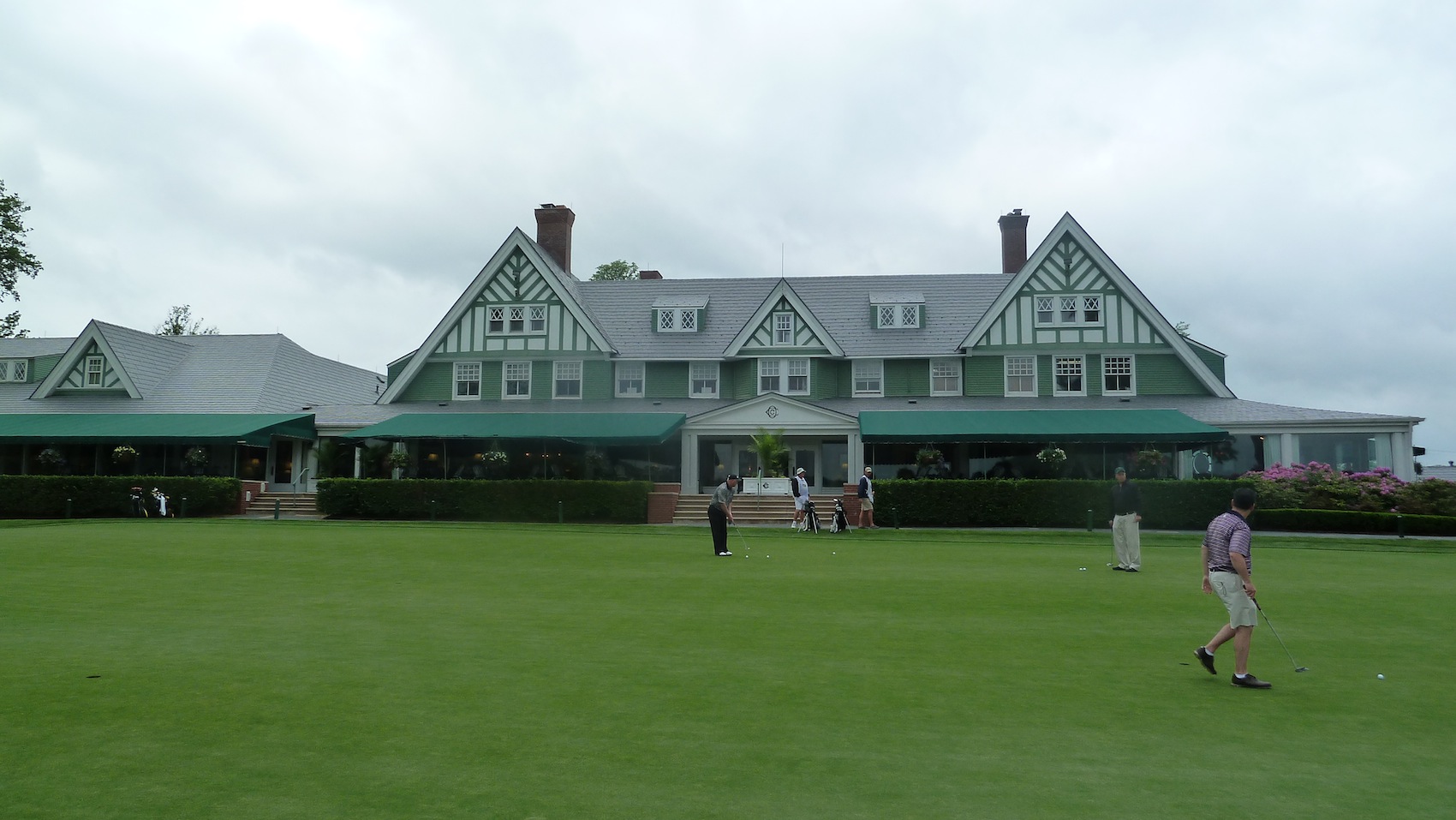
Once we had our shoes on we hit the practice tee where we met our caddies and warmed up with a few balls. From there we walked to the practice green to roll as many putts as possible to get a feel for the lightning fast greens. I dropped a couple of balls that immediately rolled 15 feet away from me. Yikes! The practice green at Oakmont is a part of to the 9th green so technically the green is enormous. The photo below was taken on the practice green and shows the iconic Oakmont clubhouse over looking the course.


Merion Golf Club (East Course)
Location: Ardmore, PA
Architect: Hugh Wilson
Year Constructed: 1912
Played: June 20, 2008
Merion Golf Club . . . so much history has happened here that a book could be written on that alone. With a current count of 17 USGA events having been contested over Merion’s East Course that is more than any other course in the United States. Bobby Jones’ first major was the 1916 US Amateur played here, he won the US Amateur here in 1924 and of course his historic US Amateur win for the Grand Slam in 1930. Ben Hogan executed a miraculous comeback to the game here at the 1950 US Open after a near death automobile accident just 1 year earlier. Lee Trevino defeated Jack Nicklaus in a dramatic 18 hole play off to become the US Open champion in 1971. As much great history as there is, the story is far from finished for Merion. The USGA will be coming back to Merion for the Walker Cup in 2009 and the US Open will return in 2013.
Until 1941 when the club changed it’s name to the current version the club was known as the Merion Cricket Club. There are two courses here, the West and the more famous East. The club was originally founded in 1896 and played on the original golf course in neighboring Haverford. In 1910 the members decided to build a new course and sent member Hugh Wilson, a Scottish immigrant, to Scotland and England for 7 months to study golf course design. He returned with a head full of ideas and proceeded to layout the East Course which opened in 1912 and then the West Course which opened in 1914. That is a pretty incredible turn around time for getting courses built considering that it was done without the help of modern machinery in those days. Another amazing feat is that the East Course covers just 126 acres which is nothing compared to other golf courses. Augusta National covers almost triple that acreage at 365. If you want to get a chance at playing a Hugh Wilson course you have very few options. The only other courses he designed besides Merion’s East and West are Cobb’s Creek and the last 4 holes of Pine Valley.
Read the rest of this entry »
Continuing with our series from the The Itinerant Golfer’s quest to play all top 100 American golf courses, The Scratch Pad is glad to bring you a profile of the 33rd rated golf course in America, San Francisco G.C.
San Francisco Golf Club
Location: San Francisco, CA
Year Constructed: 1918
Played: May 22, 2010
Please just let me find it . . . Is that really so much to ask? . . . Just give me a chance . . . All I’m asking for is a chance. These thoughts raced through my head as I walked to the left side of the 18th hole at San Francisco Golf Club. The 18th hole is a 508 yard par 5 and I REALLY would like to make a birdie here. Under normal conditions I should be able to reach the green in two, but today the wind is blowing something terrible and after floating a weakly cut drive to the middle of the fairway I was well outside the “go zone”. With the ball lying slightly above my feet for my second stroke I hooked the shot out of sight and now I’m literally just hoping I can find it. All I want is to have a chance to knock my third shot on the green so maybe I can roll a putt in for the birdie. To me, this seems like a more than reasonable request.
The Golf Club
Location: New Albany, OH
Architect: Pete Dye
Year Constructed: 1967
Played: June 21, 2009
If I were to start my own golf club today I would hope it came out looking exactly like The Golf Club in New Albany, OH. The Golf Club was founded in 1967 by Fred Jones with the simple goal of having a private club where he and his friends could play golf and enjoy themselves. Mr. Jones managed to piece together a 400 acre parcel of land and then took a chance on a virtually unknown architect by the name of Pete Dye to build his golf course. When the project was finished a world class golf club was left as a monument to their partnership.
Thanks to my fellow Top 100 golfer Larry Berle. I’m playing The Golf Club today with his friend Bob. I cut through the quaint little pro shop and over to the main clubhouse building where the dining and locker rooms are located. When I stepped through the door to the locker room I saw what might be my favorite locker room ever. There were tables and chairs in a bar area, leather couches for lounging, card tables, stacks of books and magazines on golf, exposed wooden beams, a huge fireplace and rows of nicely aged dark wooden lockers.


Once we were sufficiently warmed up we went to the putting green to wait our turn. The practice green here is unique in that it is a shared green with the 18th hole. This is something I’ve not ever seen before. As there are no tee times at The Golf Club so members just hang around on the putting green until its their turn to go off. The membership is VERY small at 150 so even at its busiest times there aren’t many golfers on the course.
We played from the white tees which were 6632 yards. The first hole pictured below is a 349 yard par 4 dogleg right. The smart player will avoid the bunker on the right. Its very much in play for a sliced shot and the grass in the middle of the bunker is very long and very penal . . . trust me on that. The 2nd hole is a long par 4 at 444 yards with a blind tee shot.
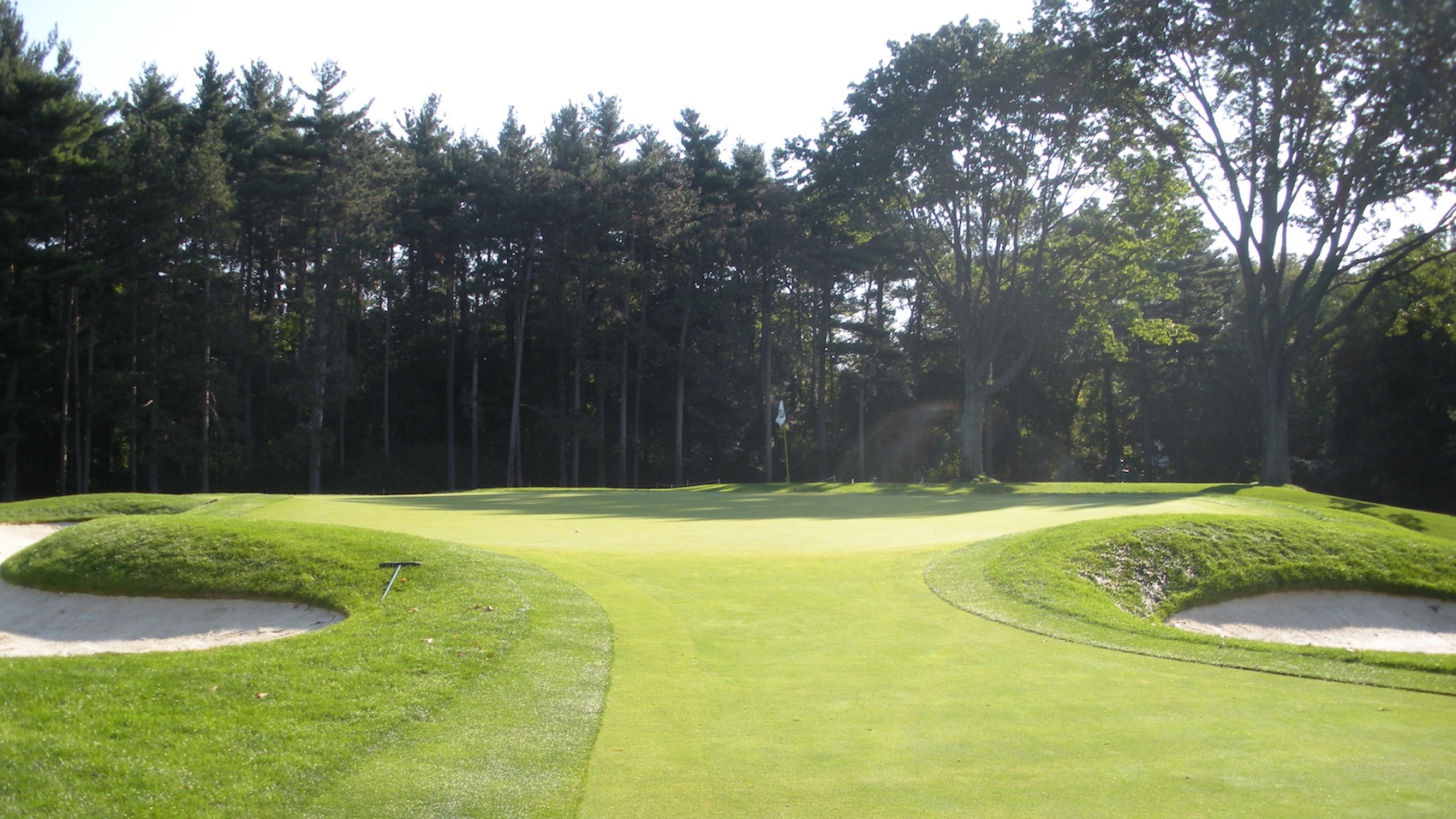
The 3rd hole pictured below is a fantastic par 3 that plays 185 yards. Shots that fall short will find the water and those that are long will get in the nasty bunkers behind the green. Note that Pete Dye was using his signature railroad ties even this early in his career. The 4th hole is a 518 yard par 5. In the photo below you can see that the fairway throws everything to the right so the line is to play down the left hand side as close to the tree as possible.
Seminole Golf Club
Location: Juno Beach, FL
Architect: Donald Ross
Year Constructed: 1929
Played: June 28, 2011
Playing the Top 100 is rife with hurdles and pitfalls. Anyone who has been following my quest at this website knows that the largest and most difficult obstacle is the fact that about 85% of the courses are private and require a member host or sponsor to play. Searching for members is difficult when it comes to all clubs, but for a variety of reasons some are considerably more difficult than others. Seminole Golf Club in Juno Beach, Florida is one of the most difficult ones on the list.
Seminole is only open for a 5-6 month period of time and, as I understand it, most of the members live outside of Florida during the summer. This leaves me once again searching nationwide for the proverbial snowball in a snowstorm. Guest play at Seminole must be accompanied by a member. For Seminole members who wish to have guests but are unable to play with them, there is a very small window for two member sponsored groups of unaccompanied guests each day.
One of the many great things about the Top 100 Quest is the incredible people I have met along the way. Golf is full of kind and friendly people who have been enormous supporters of my quest which never ceases to amaze me. One of those people is a young club pro from Michigan. Corey and I became friends about two years ago and like me Corey loves, appreciates and respects great golf courses. Corey also has the great fortune to work at a top quality club that includes a large number of members who belong to multiple clubs, many of them on the Top 100 list. One day in January of this year I received a phone call from Corey who informed me that his member friend had sponsored an unaccompanied group and that Corey had a spot for me to join him!
We arrived at the club at 8:30 and the nice lady in the office opened her window and gave us the book to sign in before we made our way to the locker room. I have to say that it was a great feeling to write my name in the guest book. That simple little act was a bit of pinch me moment and drove home the gravity of the situation in which we were currently ensconced. Read the rest of this entry »
Continuing our profile of The Itinerant Golfer’s quest to play all top 100 American golf courses, The Scratch Pad is glad to bring you a profile of the 5th rated golf course in America, Cypress Point Golf Club.

Cypress Point
Location: Pebble Beach, CA
Architect: Alister Mackenzie & Robert Hunter
Year Constructed: 1928
Played: April 15, 2008
I’ve just knocked my ball onto the green at perhaps the most famous hole in golf and my caddie has walked ahead while I enjoy the long walk to the green with my putter in hand. As I stroll around the path to the fairway watching the seals play in the inlet below I can’t help but get a little overwhelmed by the moment.
Anyone who is familiar with the great golf clubs of the world knows Cypress Point Club. Bing Crosby was a member and made the club famous by including it in his annual Crosby Clambake (regretfully renamed the AT&T Pebble Beach National Pro-Am) which was a regular tour stop until 1991 when the club elected to withdraw. Another member, Bob Hope, very famously stated in regards to the exclusivity of the club “One year they had a big membership drive at Cypress . . . they drove out 40 members”. The bottom line is that this place is one of the toughest tee times in the world to obtain.
Opened in 1928 Cypress Point is often referred to as Alister Mackenzie’s finest design. Mackenzie also designed Bobby Jones’ beloved Augusta National so that gives you an idea of the gravity of the statement that Cypress Point is Mackenzie’s finest work. The course is laid out in 3 groupings of holes. Holes 1 through 6 are woodland holes set in the midst of the cypress and pine trees. Holes 7 through 13 are dunes holes expertly laid out among the natural sand dunes. Finally holes 14 through 18 are seaside holes that test the mettle of even the best of players lucky enough to tee it up here.
My day at Cypress Point started early. I had the dew-sweeper tee time of 7:15 AM and I would be playing alone today. I play solo a lot at home so I’m used to playing my match against Old Man Par and often times prefer it. In retrospect, I think playing alone here made the round that much more special.

The guys in the pro shop directed me to the locker room where I could change shoes. It was one of those great old locker rooms where the benches have spike marks from years of shoe tying before the days of soft spikes and ghosts lurk around every corner. Byron Nelson, Ben Hogan, Arnold Palmer, Jack Nicklaus . . . all the greats have laced their shoes up here. In a quick glance around the room I saw Clint Eastwood’s locker and Charles Schwab’s but I didn’t linger too long as I was anxious to get out on the course. The photo to the right is not real clear, but it shows the unusual locker design.
We’re glad to welcome a new guest blogger at the Scratch Pad! The Itinerant Golfer profiles Steve’s quest to play all of the top 100 golf courses in America. You’ll get a chance to see a round in action, along with great photos of the holes on the course. We’re glad to have him with us, and will be sharing some of his best posts with you.
Whistling Straits
Location: Haven, WI
Architect: Pete Dye
Year Constructed: 1998
Played: June 11, 2009
I wasn’t quite sure what to expect as I headed to Wisconsin to play Whistling Straits. Despite its high ranking of #22 on the Top 100 list, I wasn’t overly excited to play it. From what I could tell about the course from my research on the internet and from watching events played there on TV it was probably not going to be my kind of course. I was hoping to be surprised.
Once I got outside of Milwaukee I was in rural Wisconsin and was thankful for my trusty GPS unit. Eventually I saw the Whistling Straits sign and turned into the driveway. As I wound my way around I was very pleasantly surprised to see that there was no colossal clubhouse or hotel. Instead it was just a modest little clubhouse built to look like an Irish Cottage. Whistling Straits Golf Course was designed to have the feel of an authentic Irish golf club. I’m feeling better about this already. The photo below (which I did not take) shows a great view of the clubhouse.

Herb Kohler of Kohler faucet fame built Whistling Straits. Kohler’s corporate HQ are just a driver and pitching wedge away from Whistling Straits. The American Club was actually not built by Herb Kohler, it was actually used by the Kohler Company to house the immigrant workers at the factory in the early years of the company, it was then renovated and turned into what is now a Five Diamond Resort. In addition to serving recreational golfers like me the course has also hosted events for both the PGA and USGA. The first major event to be held at the course was the PGA Championship in 2004 Read the rest of this entry »